







Sustaining Our Planet for Future Generations
Kayunga District is at a tipping point—caught in the grip of an escalating environmental crisis that is silently shaping the lives of thousands of school-going children. What was once a vibrant landscape filled with thriving ecosystems is now scarred by deforestation, pollution, and climate shocks.
Tree Planting Initiatives
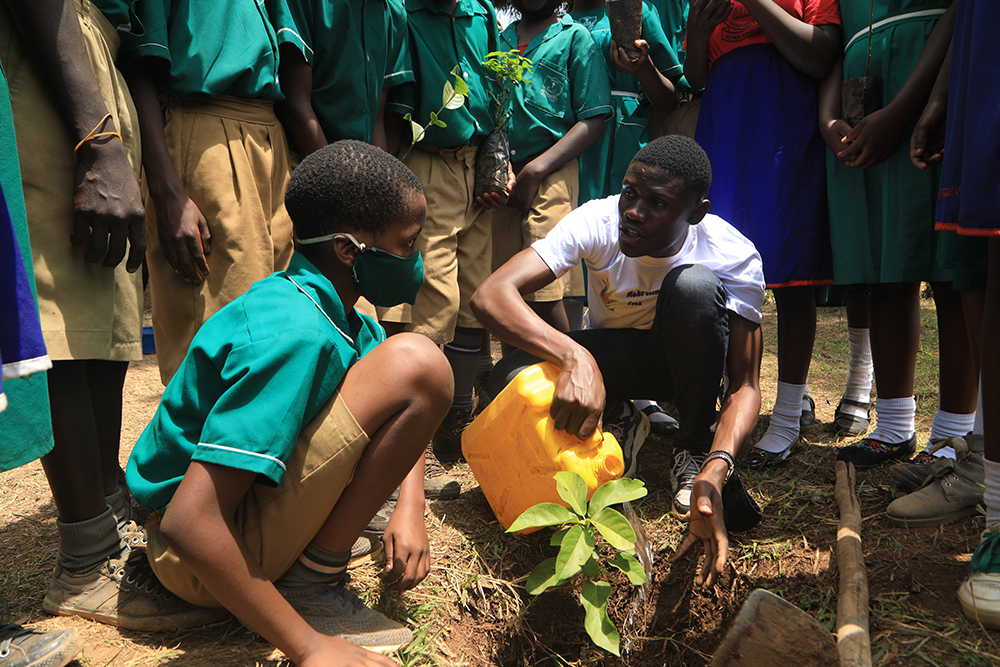
Deforestation is among the most pressing environmental threats in Kayunga District, driven largely by the unsustainable demand for charcoal, timber, and farmland. The BORE Foundation’s Tree Planting Initiatives respond directly to this crisis, with a mission to restore degraded land, enhance biodiversity, and instil a love for nature among young people.
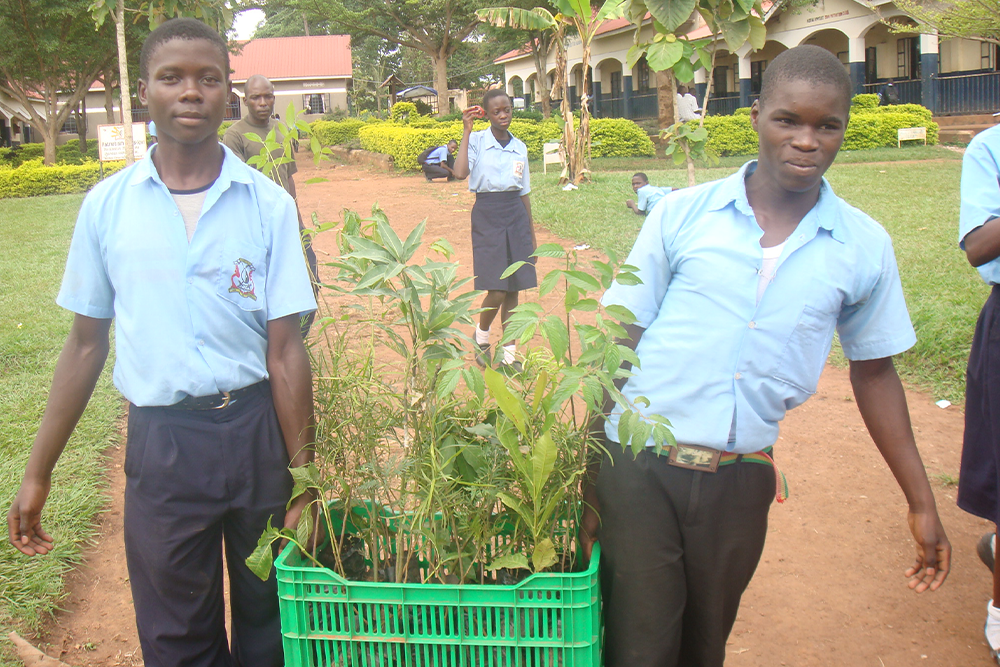
In partnership with schools, local councils, and community members, we plant thousands of indigenous and fruit-bearing trees in school compounds, homesteads, along degraded riverbanks, and in open communal spaces. These trees improve air quality, prevent soil erosion, act as natural windbreakers, and in many cases, supplement nutritional needs by producing fruits for school children.
But this is not just about planting trees—it’s about planting values. Each school becomes a “green classroom,” where students are involved in nurturing seedlings, monitoring growth, and learning about ecological cycles. Tree care becomes a part of the learning process, cultivating a generation that understands the connection between healthy forests and community well-being.
Through this initiative:
- Students gain hands-on knowledge in environmental science.
- Schools enjoy cooler microclimates, reducing heat stress during classes.
- Families and students receive fruit trees that enhance food security and income.
By turning barren spaces into green sanctuaries, BORE Foundation is helping communities reimagine their environment not as a resource to exploit, but a legacy to protect.
Eco-debating Competitions & Environmental Education
Climate change, plastic pollution, and biodiversity loss are complex issues—but when we give young people the tools and platforms to speak about them, they become powerful advocates for sustainability. BORE’s Eco-Debating Competitions combine the excitement of public speaking with the urgency of environmental education.
We host structured debate competitions in partner schools where students explore vast topics surrounding environmental degradation and conservation. These events sharpen students’ critical thinking, research, and persuasive communication skills—all while deepening their understanding of ecological challenges.
Complementing the debates is a strong environmental literacy curriculum integrated into school clubs. Through workshops and eco-lessons, students learn about:
- The science of climate change
- Biodiversity and ecosystems
- Waste management and pollution control
- Renewable energy and sustainable practices
The debates don’t just end with a trophy—they often spark real student-led action, such as tree planting days, awareness marches, community clean up drives and even peer-to-peer education.
The result? Confident, informed youth who can articulate their concerns, propose solutions, and influence both their peers and the adults in their communities. These are not just school competitions—they are launchpads for leadership.
Recycling & Eco-friendly Practices
In many schools in Kayunga district, improper waste disposal—especially plastic pollution—continues to degrade soil, block waterways, and pose serious health hazards. BORE Foundation’s Recycling and Eco-Friendly Practices program empowers schools and communities to rethink waste—not as a burden, but as a resource.
We introduce basic waste segregation systems in schools, separating plastics, organics, and non-recyclables. Students are trained in creative reuse techniques, such as:
- Turning old bottles into irrigation drippers
- Using plastic waste to create eco-bricks
- Upcycling jerrycans and old fabric into planters or decorative items
School “Green Teams” lead community clean-up drives, often collecting hundreds of kilograms of waste. These events are not only practical—they’re symbolic, reinforcing the values of civic responsibility and pride in a clean environment.
The program also introduces eco-friendly habits such as:
- Encouraging the use of reusable bags and bottles
- Promoting handmade sanitary pads from eco-materials
- Supporting schools to build compost pits for organic waste
Through its holistic suite of environmental programs—ranging from tree planting to leadership development—BORE Foundation is laying down deep green roots in Kayunga’s soil and spirit. We are not just responding to an ecological crisis; we are mobilizing hope, action, and leadership from the ground up.
These programs have already begun transforming mindsets, restoring ecosystems, and preparing young people to become champions of sustainability. The future of Kayunga depends on the seeds we plant today—both in the ground and in the hearts of its children.